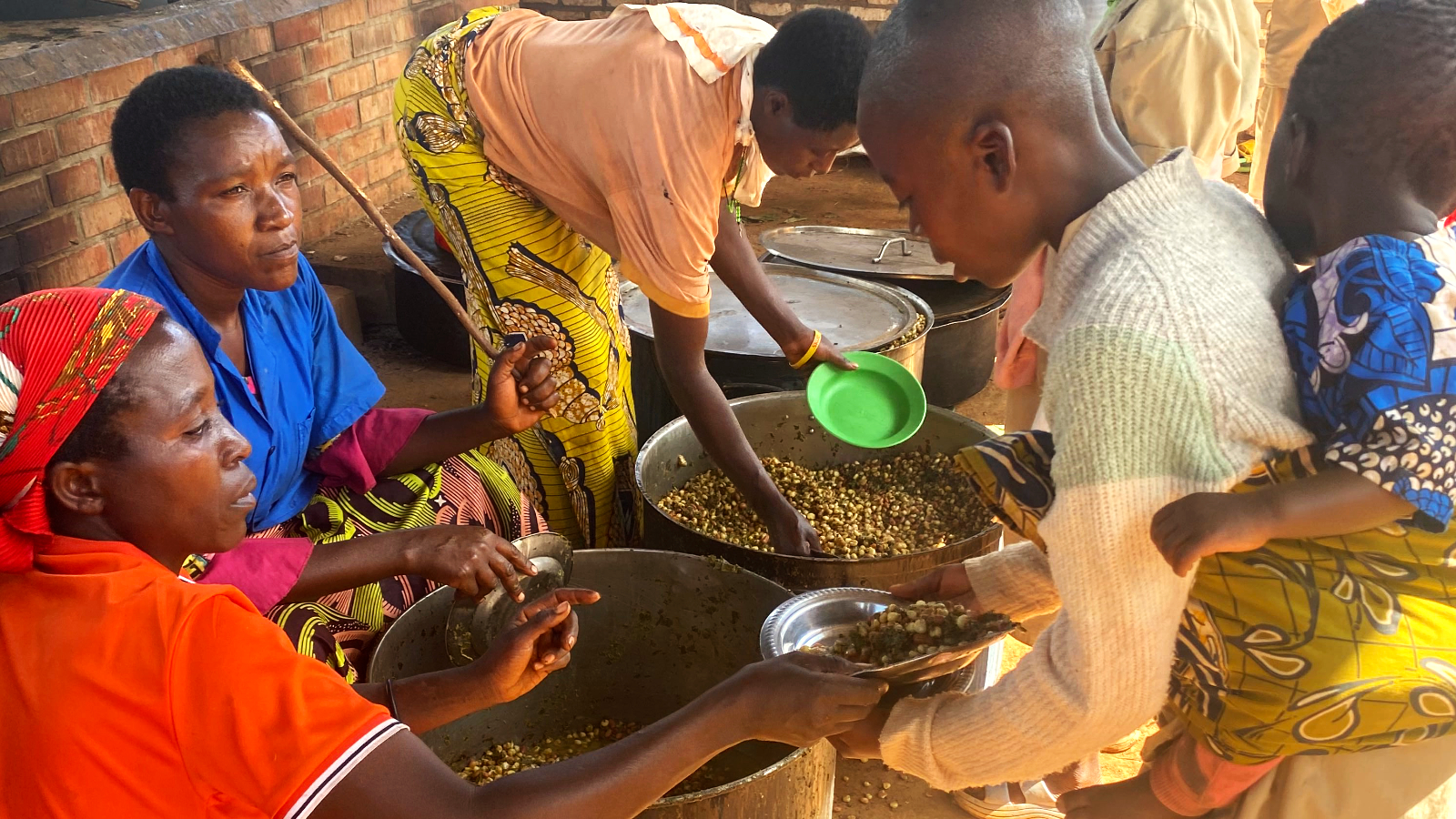
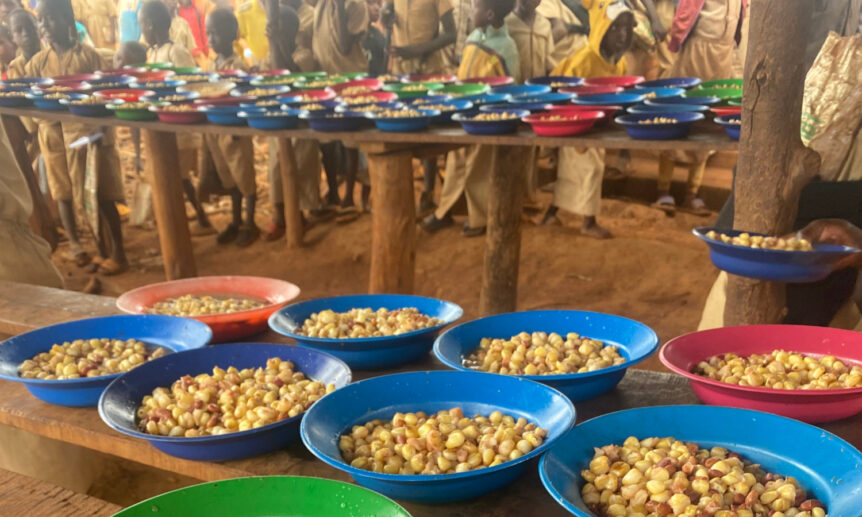
Above: Lunch is served for schoolchildren in Muyinga Province, Burundi, 2025. This article and all photos in it by Tonja Rice, 13th Class Mickey Leland International Hunger Fellow placed with World Vision in Burundi.

Burundi
Ainsi que dit le proverbe: ventre affamé n’a point d’oreilles. “As the saying goes, a hungry belly has no ears.” Jean de la Fontine’s words gnaw at us today because hunger still impacts too many children’s ability to listen, learn, and dream.
But a meaningful shift is taking place in Burundi. Since 2019, 428,530 school children can learn with fuller stomachs thanks to the strong partnership between local communities, the Government of Burundi, the World Food Programme (WFP), and World Vision International Burundi (WVIB).
And this partnership is not only strengthening school feeding programs across Burundi. By shifting purchasing of food ingredients (commodity crops) for school meals from an import-driven model to a local procurement model, Burundian farmers, cooperatives, and local economies are all seeing the benefits.
Today WVIB supports 497 schools throughout the five provincial regions of Burundi. Every child at a participating school can count on receiving a nutritious meal three days a week. This is made possible by a collaborative network of smallholder farmers’ cooperatives, parents, teachers, local leaders, WVIB field staff teams, and WFP.
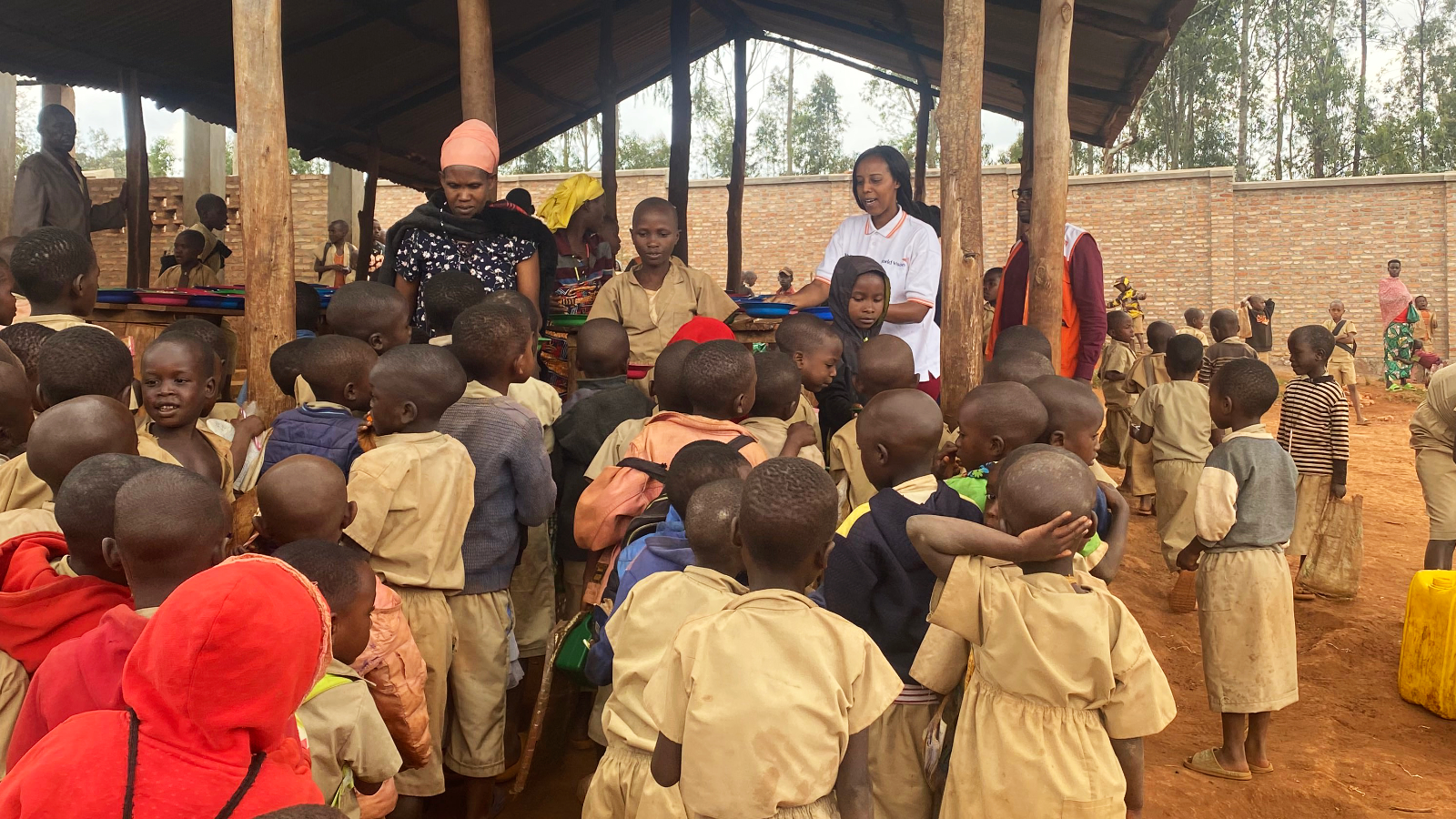
Children line up for mealtime at a school in Muyinga.
World Vision’s role in this transition has been essential. WVIB provides schools with food ingredients that can’t be found locally, including cooking oil and fortified salt. WVIB field teams visit local agricultural cooperatives and school leadership to strengthen the entire supply chain by establishing processes, standards, and inspection protocols. They also review documentation and record-keeping practices, check and assess storehouse and storage conditions, observe post-harvest handling practices, evaluate the quality of food commodities such as corn, rice, beans, and cooking oil, and provide targeted technical support.
Burundi’s provincial departments of education also play an active role by monitoring food quality and quantity and helping address technical challenges with the support of WVIB field staff. These capacity-building visits help cooperatives improve their storage systems, enhance food safety and quality, and strengthen their documentation processes, all skills that contribute to more competitive and resilient cooperative organizations. This model does more than provide meals to students: it represents an investment in rural livelihoods and a meaningful step toward strengthening Burundi’s local economy.
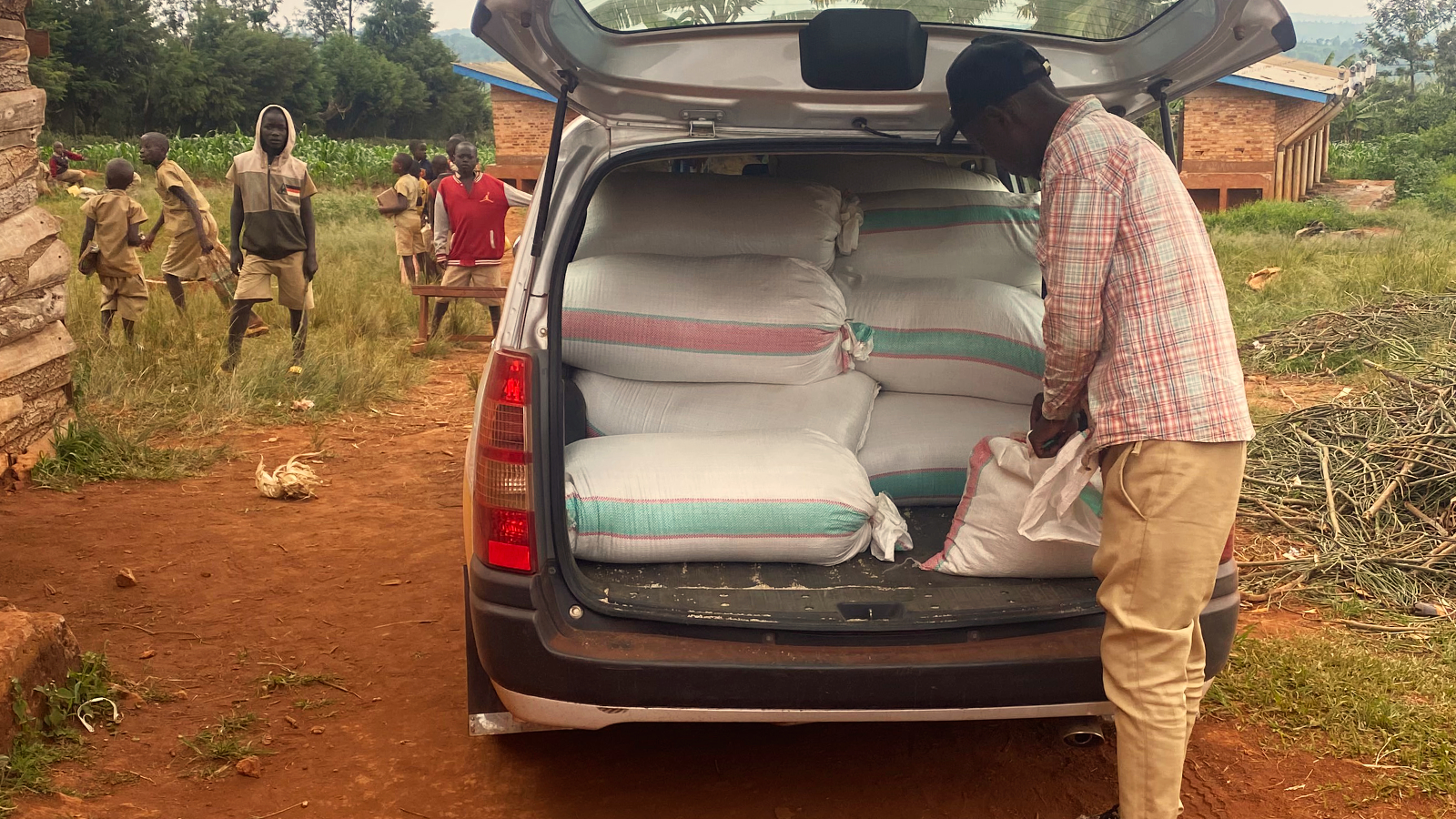
Delivering locally-produced commodity food supplied through the school feeding program.
From Imports to Local Production
When this partnership began, supply chain limitations within Burundi meant WFP had to import most commodities like beans, rice, and maize from Uganda to support the country’s school meal program. Although this approach provided essential nutritious meals for school children, Burundi’s farmers were not fully benefiting from the program, and much of the income associated with food procurement flowed outside Burundi.
Today farmer cooperatives in Burundi are increasingly meeting the dietary needs of school children by supplying locally grown food directly to schools. After harvesting, cooperative members store crops at their designated cooperative storehouse. When schools need corn, beans, rice or other staples, they contact nearby cooperatives to procure them. The cooperatives organize and transport these deliveries to the schools, which store the food according to WFP standards. WFP then pays the cooperatives for the quantities delivered to schools.
The benefits of expanding local sourcing are significant. The supply chain is shortened, more economic opportunities are created for Burundian farmers, community-level investment stimulates local growth, and local cooperatives are able to supply seeds and strengthen local production systems. The impact is already visible. As a headmaster in Muyinga shared, “The quality of the food has improved by using local farmers compared to what was provided (imported) before.”
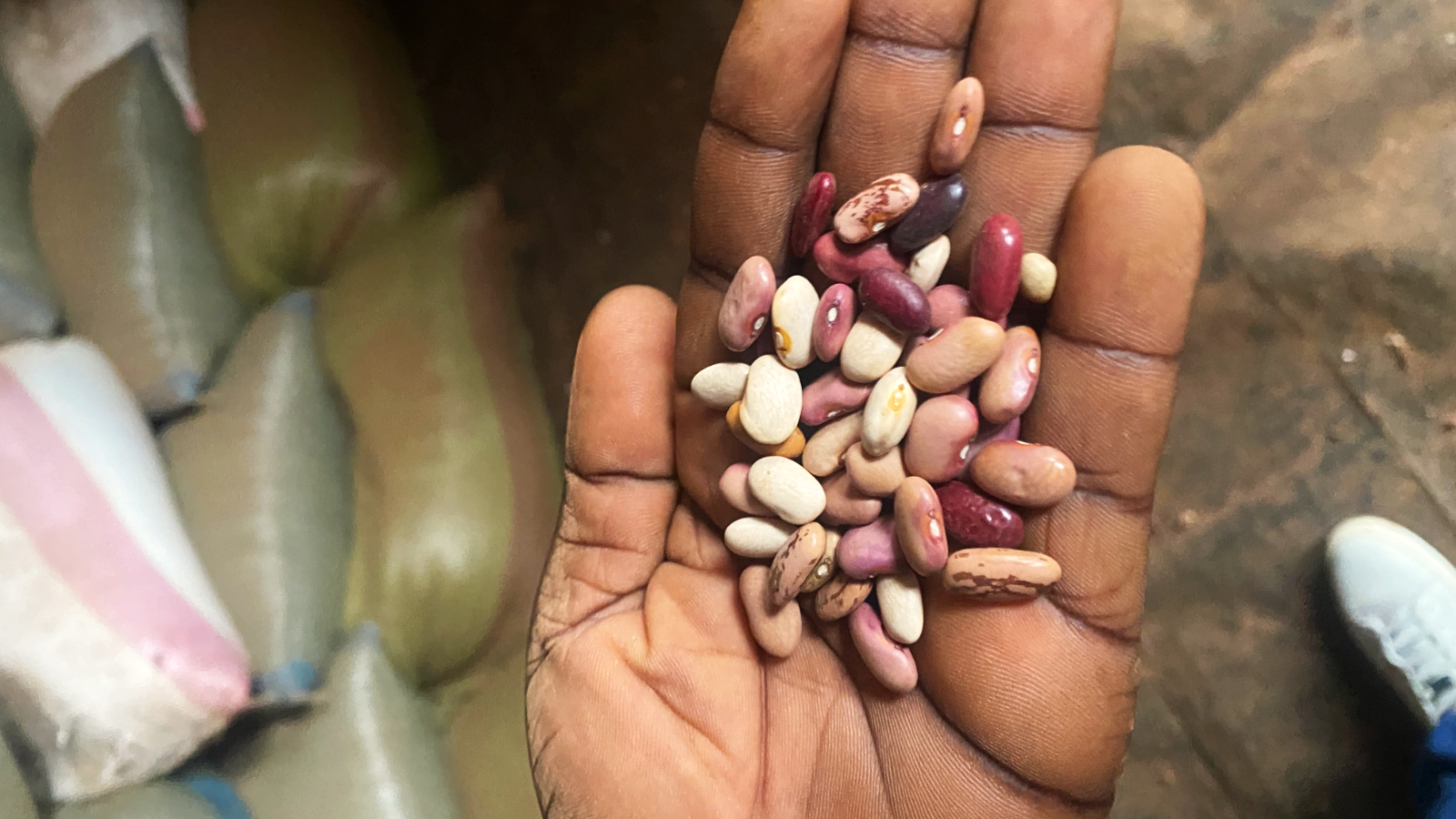
Beans produced by an agricultural cooperative in Gitega.
During a visit to a cooperative in Gitega, in the center of the country, WVIB staff learned that the group has 101 members organized into 15 smaller groups. In its early days members were required to make a financial contribution to join. Today the cooperative has built enough financial reserves so that new members do not have to pay to participate.
Before the cooperative began supplying surplus food to schools its bumper crop of maize had one reliable market: chicken feed. Now the majority of the cooperative’s excess maize goes to feed children through the school meal program. Some surplus food commodities are reserved for future use, and members are sharing knowledge and extra seed with their neighbors who are not part of the cooperative. The cooperative’s president shared their long-term vision: to have emergency savings that can serve their entire community.
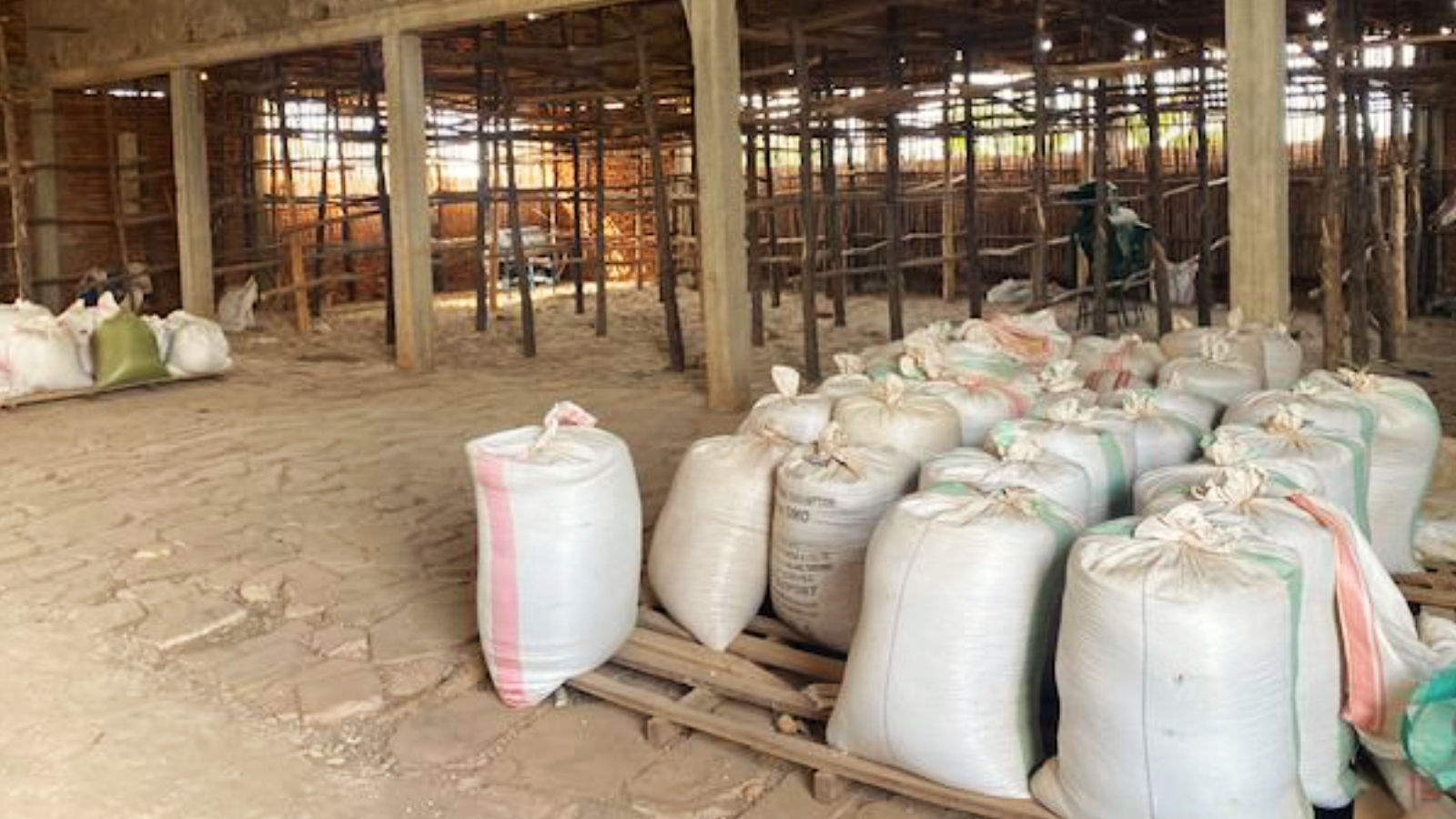
An agricultural cooperative’s warehouse.
In the southern region of Makamba, another cooperative illustrates how this model strengthens communities and livelihood, especially for women. More than half of their members are women, who generate income for their families and exercise greater economic agency. This demonstrates the broader value of cooperatives, which can empower women, improve household resilience, and contribute meaningfully to local development.
Another cooperative in the northern region of Muyinga offers additional evidence of growth and strengthened capacity. Like the cooperatives in Gitega and Makamba it has a large and active membership base organized into several smaller groups, with 123 women and 55 men participating.
Many women have benefited from local training on improved agriculture models and are now training others in their communities, extending the impact beyond the cooperative. Women also have increased access to loans, improving household resilience as they support their families’ economic stability.
Agricultural transformation is well underway. Members have adopted new techniques, pooled land to increase efficiency, and seen yields improve as a result. Cooperative leadership support has been instrumental, with its president distributing seeds and facilitating broader agricultural advancement. Like the cooperative in Gitega, the cooperative in Muyinga plans to build community savings for emergencies, further strengthening local resilience.
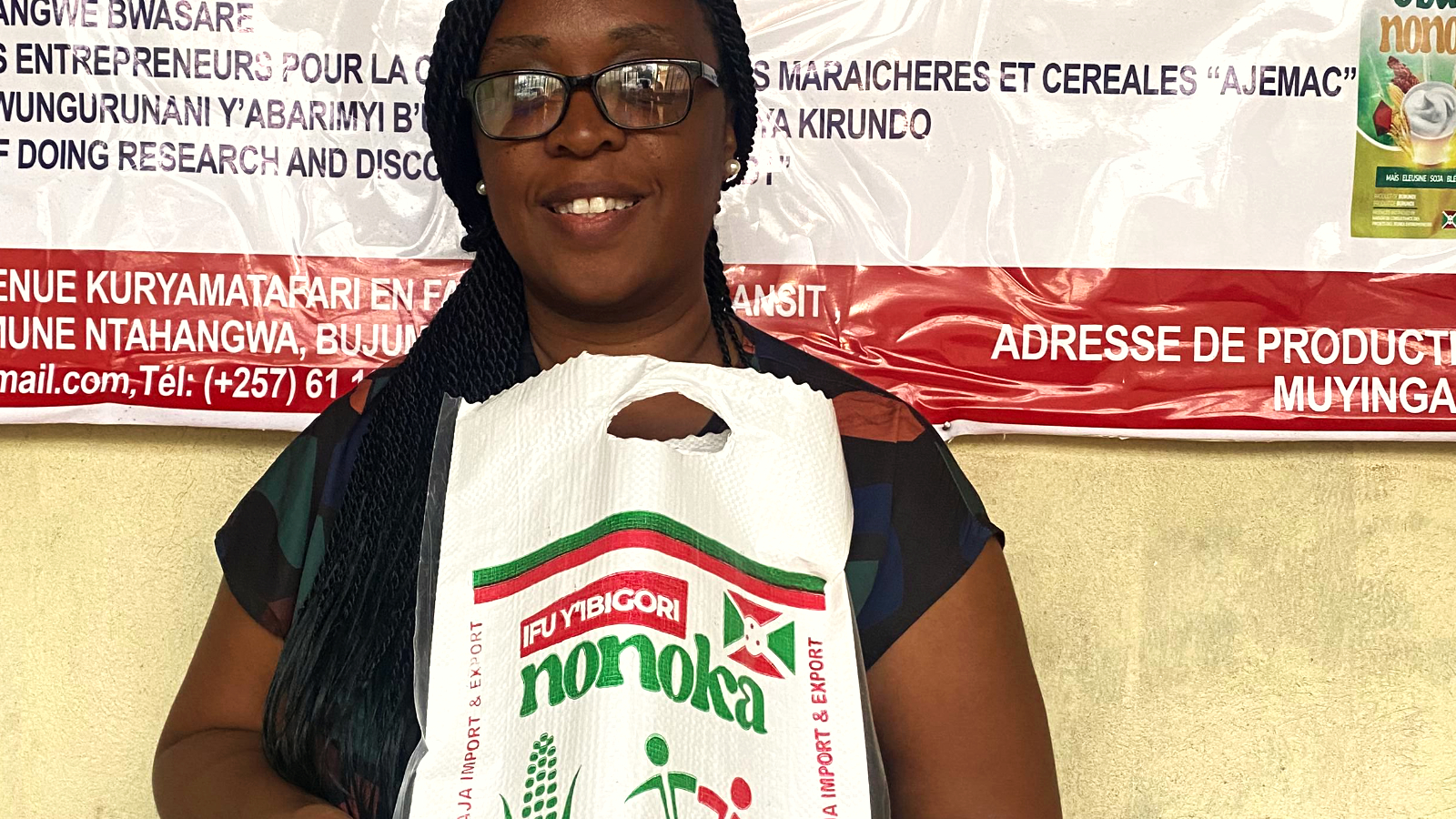
Mickey Leland International Hunger Fellow Tonja Rice poses with a redesigned bag of corn flour, ready for the export market.
Breaking into the Export Market to Combat Malnutrition
WVIB’s field visits help cooperatives improve post-harvest storage and handling, financial documentation, leadership structures, and food safety and quality control processes. These improvements strengthen cooperatives’ overall capacity, making them more reliable partners and equipping them with the skills needed to compete in national and international markets. The experience of one cooperative illustrates this transformation.
Participation in the school feeding program has had a significant impact on a cooperative in the Muyinga Region. During a WVIB visit last year field staff offered suggestions to improve product packaging by adding a brand label, specifying packaging weight, and including product details. The cooperative was also encouraged to partner with a local supplier that ships cereal grains to Canada, since they were already selling some of their harvest to this company. As a result, this cooperative in the Muyinga Region is now earning revenue from exports.
For this cooperative the benefits are not only financial. They can now hire youth from the community, and are committed to combatting malnutrition, a perennial problem in the country. As the president of the cooperative stated, “We cannot say we are helping people if they do not benefit from our products. We are fighting against malnutrition.”
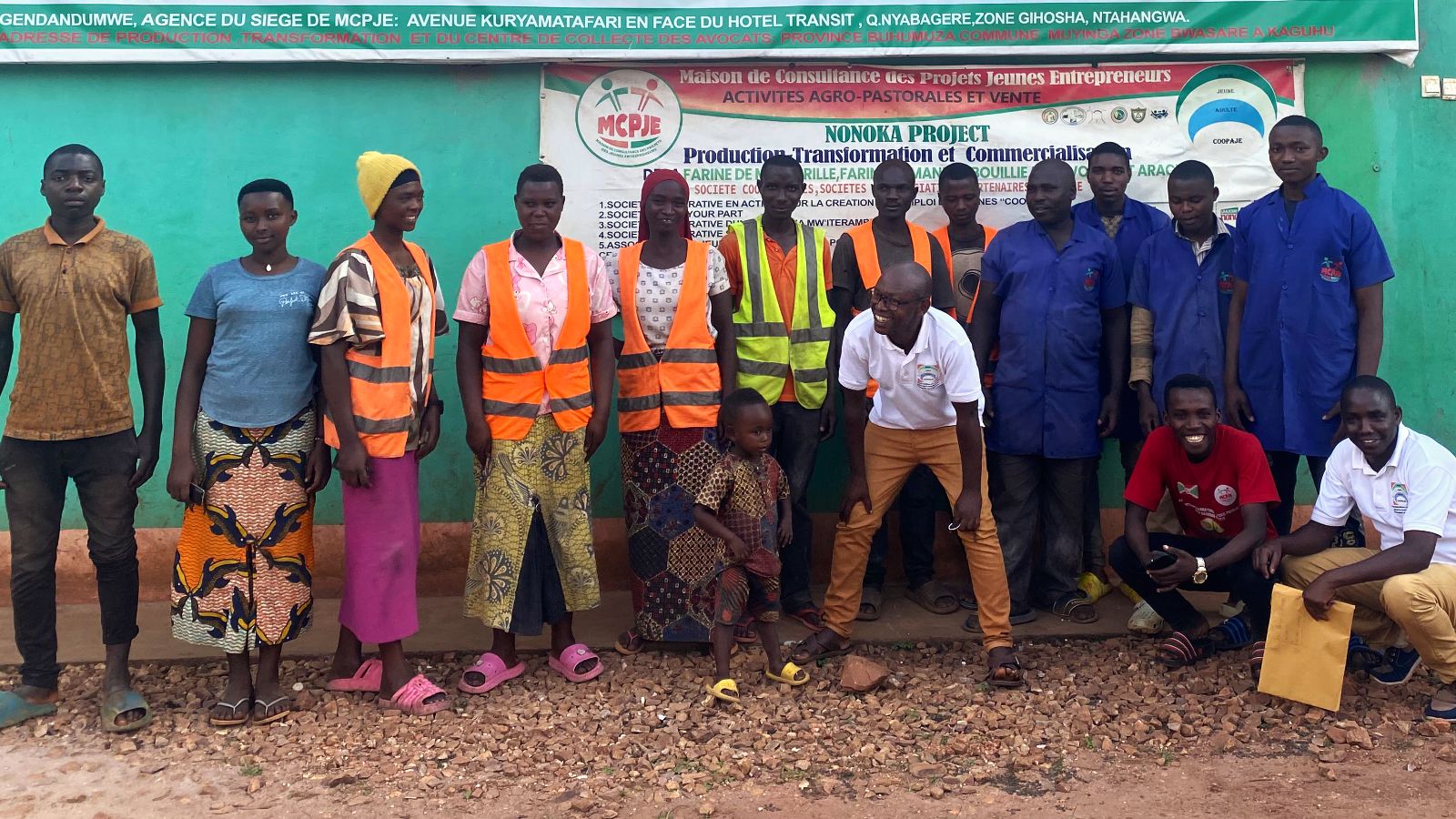
Youth workers at an agricultural cooperative in Muyinga.
A System Rooted in Burundian Strength
The shift toward procuring food for school meals from local cooperatives rather than relying on imports marks a new chapter in Burundi’s development. Farmers now have a dependable market and access to technical assistance to strengthen cooperatives’ operations. This approach also reduces the risk of stockouts when imports are delayed or unavailable. Most importantly, it keeps income circulating within Burundi, contributing to long-term community and economic resilience.
Each dish served at schools participating in the school feeding program is the result of the combined efforts of farmers, parents, teachers, local governments, and technical teams. It is a system run by Burundians, for Burundians.
There is still work ahead as this is an ongoing journey. Yet the progress to date shows what is possible when local farmers and communities grow stronger through cooperatives that build skill, generate income and create shared opportunities, and when children have full bellies that allow them to listen, learn and dream.