The third Gen Z Food & Hunger Summit, hosted by the Congressional Hunger Center and Food Systems Collaborative, took place on June 17 and 18, 2025, in Washington, D.C. Gen Z participants and partners across the country, including the Bonner Foundation, the Farmlink Project, Universities Fighting World Hunger, and the World Food Prize Foundation, learned the basics of advocacy and Congressional outreach, domestic and global food security trends and current policy, and keys to building successful coalitions and social movements.
The summit culminated in meetings with Congressional offices where participants shared their perspectives and experiences with food insecurity in their communities. They also highlighted the impact of effective anti-hunger programs like McGovern-Dole Food for Education, Food for Peace, and SNAP, and the recently-reintroduced Opportunity to Address College Hunger Act (OCHOA).
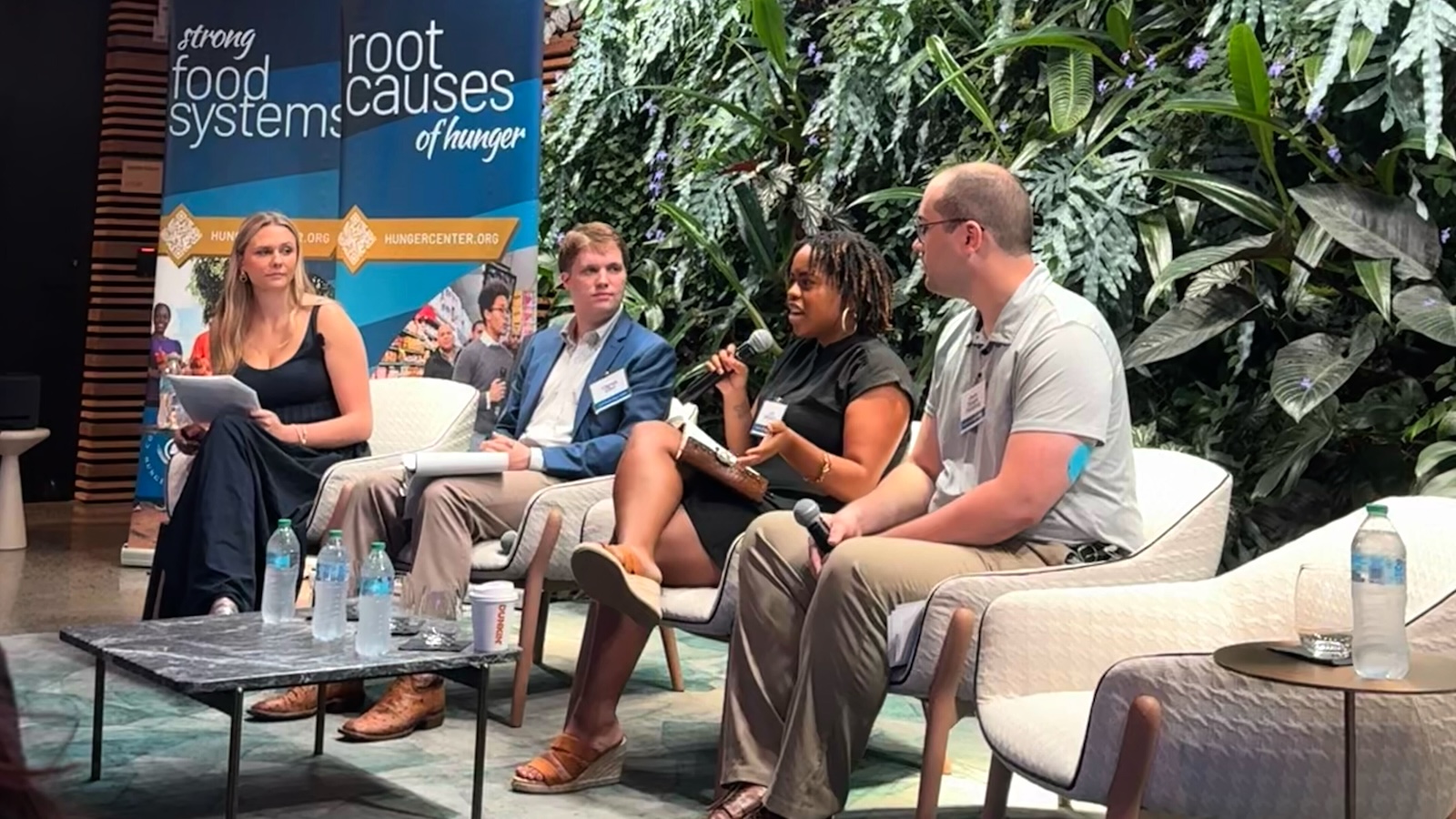
Day 1 panel discussion in Washington, D.C.
Gen Z (the generation of Americans born between 1997 and 2012) are entering adulthood facing strong economic headwinds and daunting rates of food insecurity: according to a 2022 Purdue University study, one-third of Gen Z households had visited a food pantry in the past 30 days, and overall Gen Z is twice as likely to be food-insecure compared to Millennials, Generation X, and Baby Boomers.
At the summit, students learned how sharing their individual stories with lawmakers can be a powerful component of advocacy. “There is power in numbers, in being able to speak out for food policy, especially for college students,” said Zero Hunger Intern Michelle Gornicki, a first-generation college student who is open about her own lived experience with food insecurity. “It is so important and so valuable.”
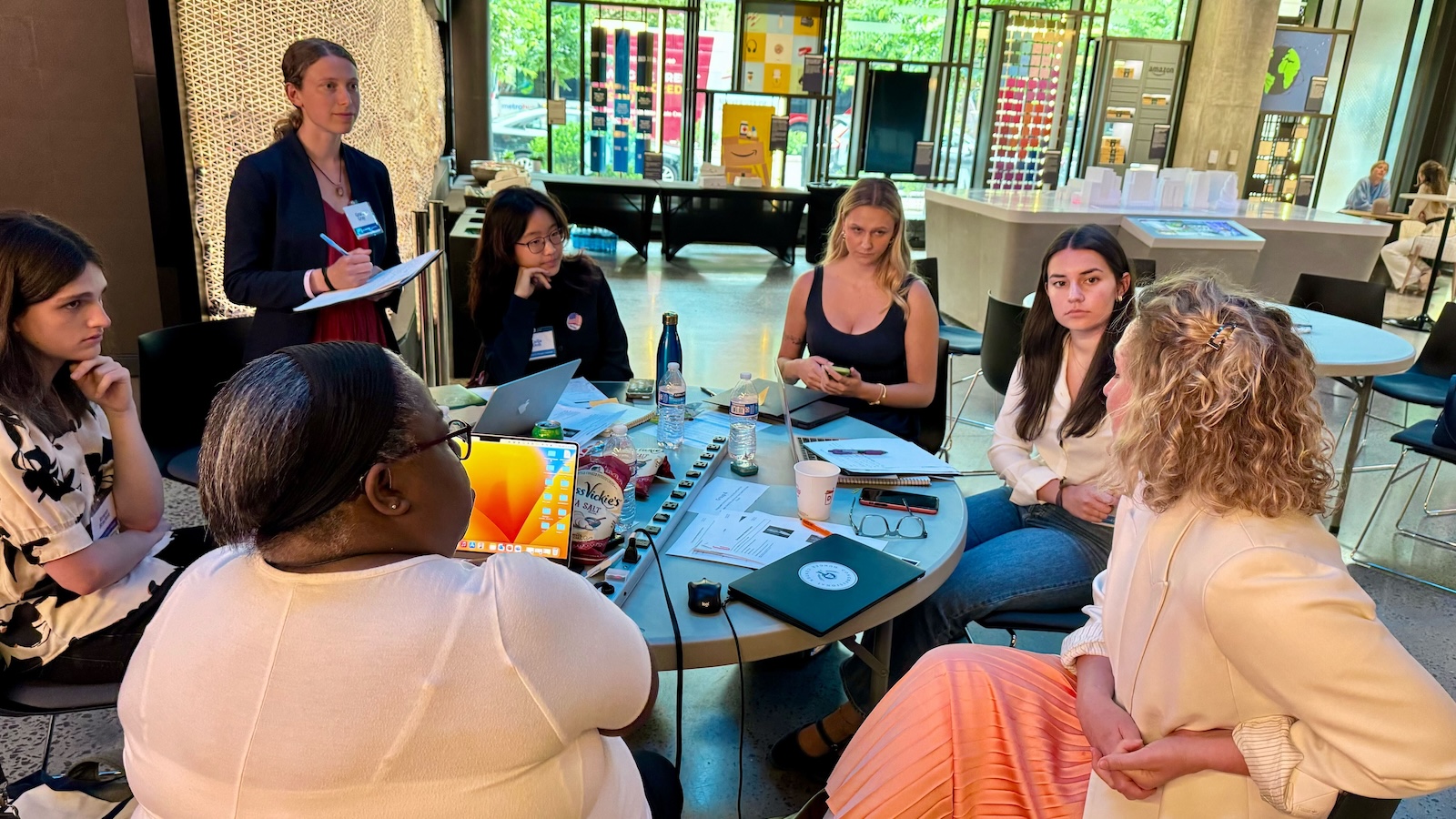
Summit participants prepare for the next day’s Congressional meetings
Students who might once have been intimidated by the thought of meeting with Congressional offices found the summit’s second day eye-opening. “I had no idea how accessible it was to advocate on the Hill for vital programs,” said Zero Hunger Intern Rowan Bracken.
The summit was made possible through the generous support of the Sodexo Stop Hunger Foundation, with additional in-kind support from Amazon, and in partnership with the Bonner Foundation, Bread for the World, the Farmlink Project, Food Recovery Network, GENYOUth, International Fund for Agricultural Development (IFAD), RESULTS and RESULTS Educational Fund, Student Basic Needs Coalition, Universities Fighting World Hunger, World Food Prize Foundation, and World Wildlife Fund.
Founded in 1993 by a bipartisan group of Members of Congress, the Congressional Hunger Center develops, inspires, and connects leaders in the movement to end hunger, and advocates for public policies that will create a food secure world.
Food Systems Collaborative is a consultancy offering services at the intersection of social impact and food systems. Sitting between the public and private sectors, FSC’s focus is on helping corporations scale and implement food donation processes, including building custom standard operating practices for food donation, finding non-profit partners, unlocking tax benefits for food donation, and more.
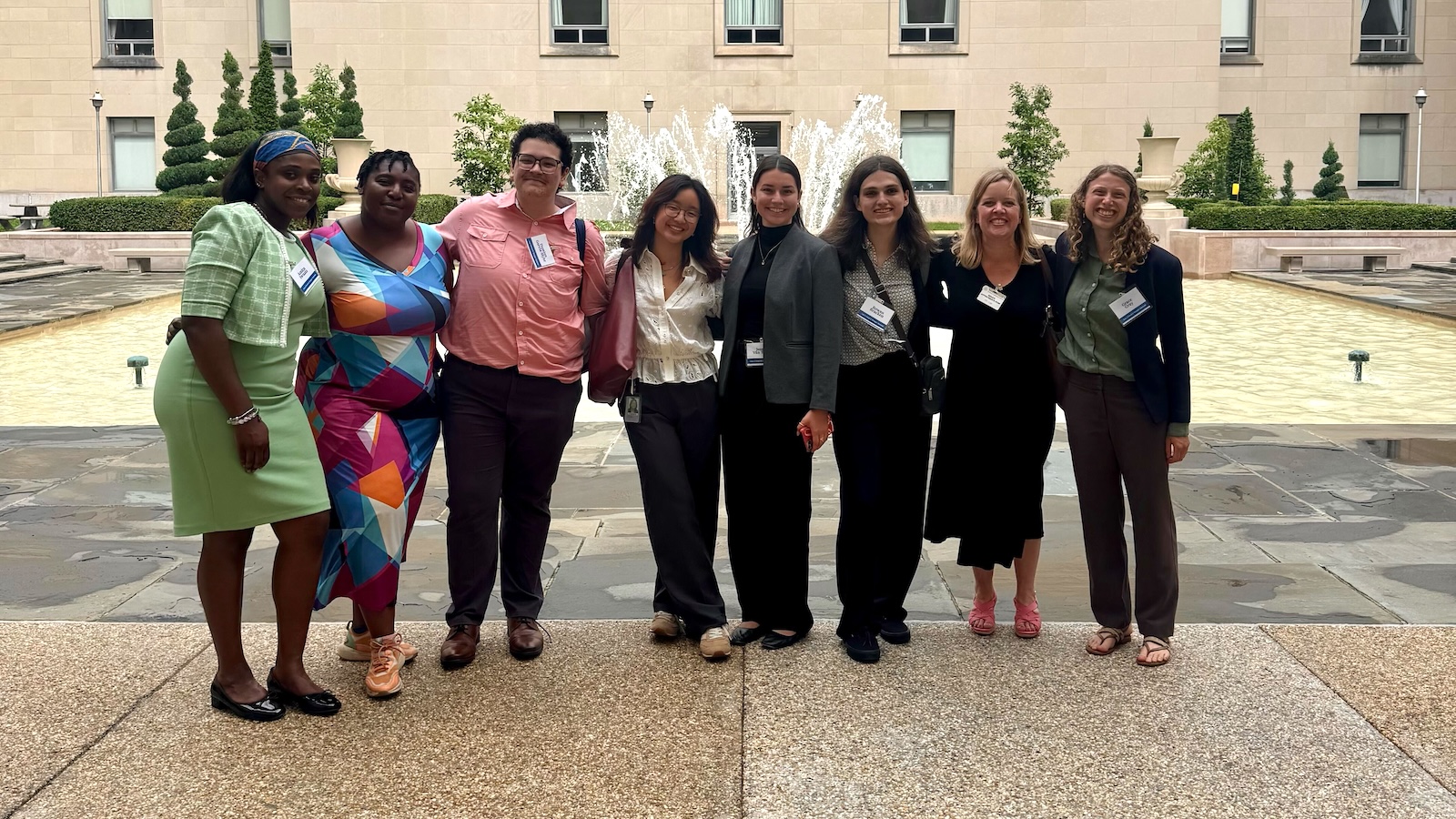
Summit participants in the courtyard of Rayburn House Office Building